.svg)
NEWS -
Aliquetin phasellus feugiat lobortis tortor hendrerit ultricies mus aliquam malesuada

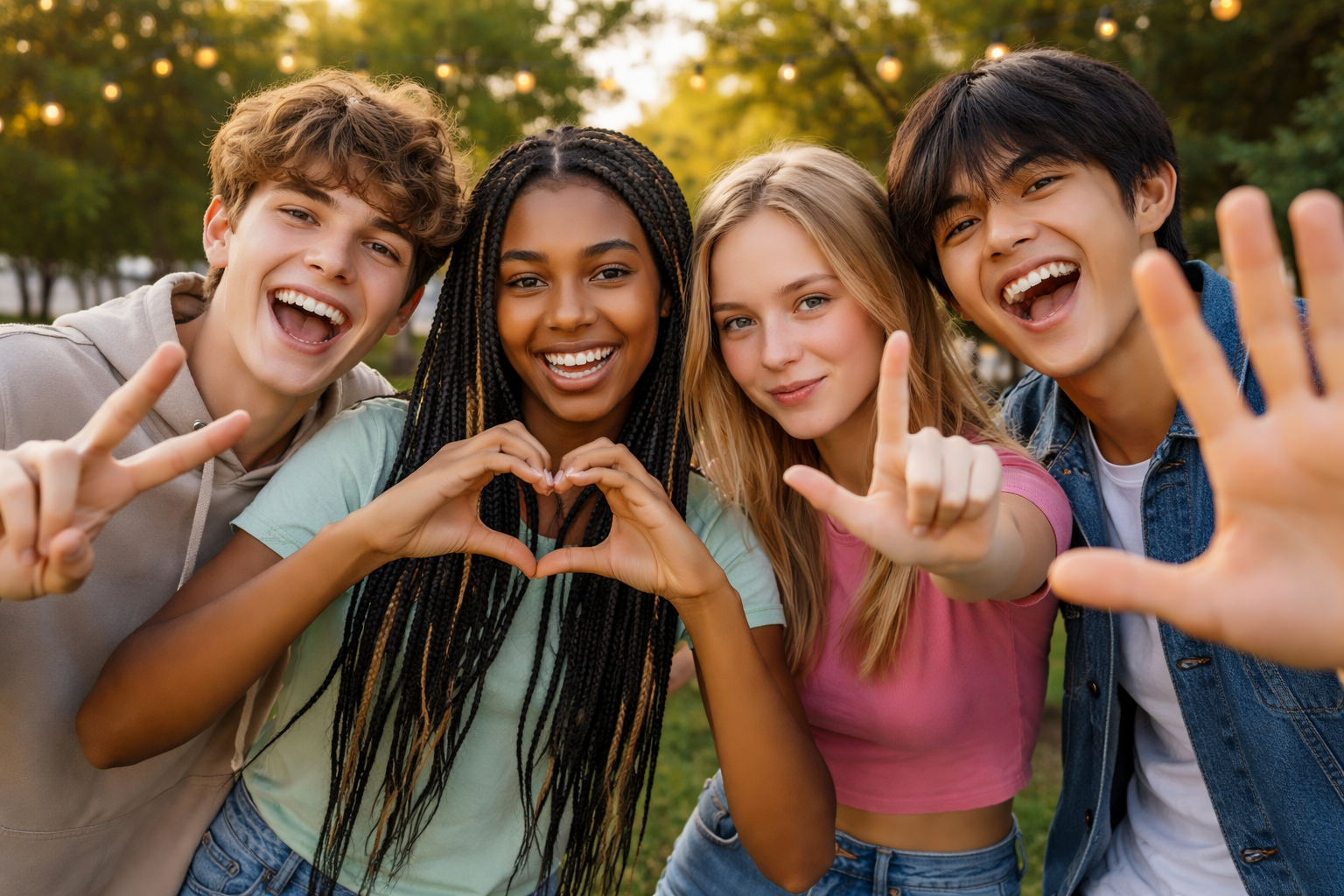
Teen hand signs are everywhere — at school, in photos, and all over TikTok and Instagram — and many parents are left wondering what these gestures actually mean. From peace signs and heart hands to inside jokes and trend-driven signals, teen hand signs can range from playful and harmless to rude or context-dependent.
This FAQ-style guide answers the most common questions parents have about teen hand signs, including what they mean, when to worry, and how to talk to your teen about them without overreacting.
Most teen hand signs are just visual slang — a quick way to say “hi,” “that’s funny,” “love you,” or “I’m awkward” without using words. They’re usually playful, trend-driven, and copied from friends or social media.
Usually, no. Most are harmless and used the same way kids use inside jokes. The time to pay attention is when a sign is paired with bullying, secrecy, sexual jokes, or risky behavior.
In the U.S., the V sign (✌️) almost always means peace, good vibes, or “I’m just posing.” The main thing to know is that in some countries, flipping the palm inward can be offensive — but most kids aren’t using it that way.
Because hand gestures are cultural. A sign that’s friendly in one place can be rude somewhere else. That’s why palm direction matters with the V sign, especially in places like the UK and Australia.
Heart hand signs usually mean affection, appreciation, or support. The full heart is “love,” the half heart is a casual “love you” (often used in selfies), and the Korean finger heart is a trendy way to show admiration.
It can look questionable, but the circle game is typically just a “made-you-look” prank. It’s immature, but usually harmless. It becomes a problem if it turns physical (hitting, punching, roughhousing) or targets the same kid repeatedly.
The L on the forehead is the classic “loser” sign. Sometimes kids use it jokingly with friends, but if it’s repeated toward one child or paired with exclusion, it can be a bullying signal.
This gesture usually means shyness, awkwardness, or nervous honesty. It’s popular on TikTok and often paired with the 🥺 emoji. It’s more emotional than edgy.
Not always. A lot of kids use these as jokes, exaggeration, or to act “cool” for a second. Still, if you see it frequently, in certain friend groups, or paired with real-life changes, it’s worth a calm check-in.
The shaka (🤙) usually means “hang loose,” “all good,” or “call me.” It’s a friendly, positive gesture that comes from Hawaiian culture and is almost always harmless.
The ❤️🤟 sign comes from American Sign Language and combines “I-L-Y.” It’s one of the most positive signs kids use — it’s affection, love, and connection.
The horns (🤘) usually mean music, excitement, or encouragement. It’s common at games, concerts, and in photos. It can be offensive in some countries, but in the U.S. it’s typically just “rock on.”
It means “I’m done listening.” It’s rude, but common — and honestly, very throwback. It’s a good moment to coach respect and tone.
Four fingers can mean different things depending on context: fourth quarter in sports, a TikTok trend, or — importantly — a silent signal for help. Because it has multiple meanings, it’s one of the few signs where it’s best to ask instead of assuming.
The biggest red flags aren’t the signs themselves — it’s the behavior around them. Watch for: repeated targeting of one child, threats, sexualized joking, secrecy, sudden attitude shifts, or gestures paired with real-world risky behavior.
Keep it casual and curious. Try: “I keep seeing that one online — what does it mean?” or “Is that a TikTok thing?” The less intense you are, the more likely they’ll actually answer.
No. Some gestures can change meaning across countries and cultures. The V sign is a great example — friendly in one place, rude in another depending on palm direction.
Stay curious, not controlling. Pay attention to what’s repeated, ask neutral questions, and focus more on your kid’s behavior and friend dynamics than trying to decode every trend.
Teen hand signs can feel confusing at first, but most are simply another way kids communicate, joke, and connect with each other. The key isn’t memorizing every gesture — it’s paying attention to patterns, behavior, and context. Stay curious, keep conversations open, and trust your instincts. When parents focus less on decoding trends and more on understanding their kids, hand signs become less of a mystery and more of a window into how teens express themselves today.