.svg)
NEWS -
Aliquetin phasellus feugiat lobortis tortor hendrerit ultricies mus aliquam malesuada

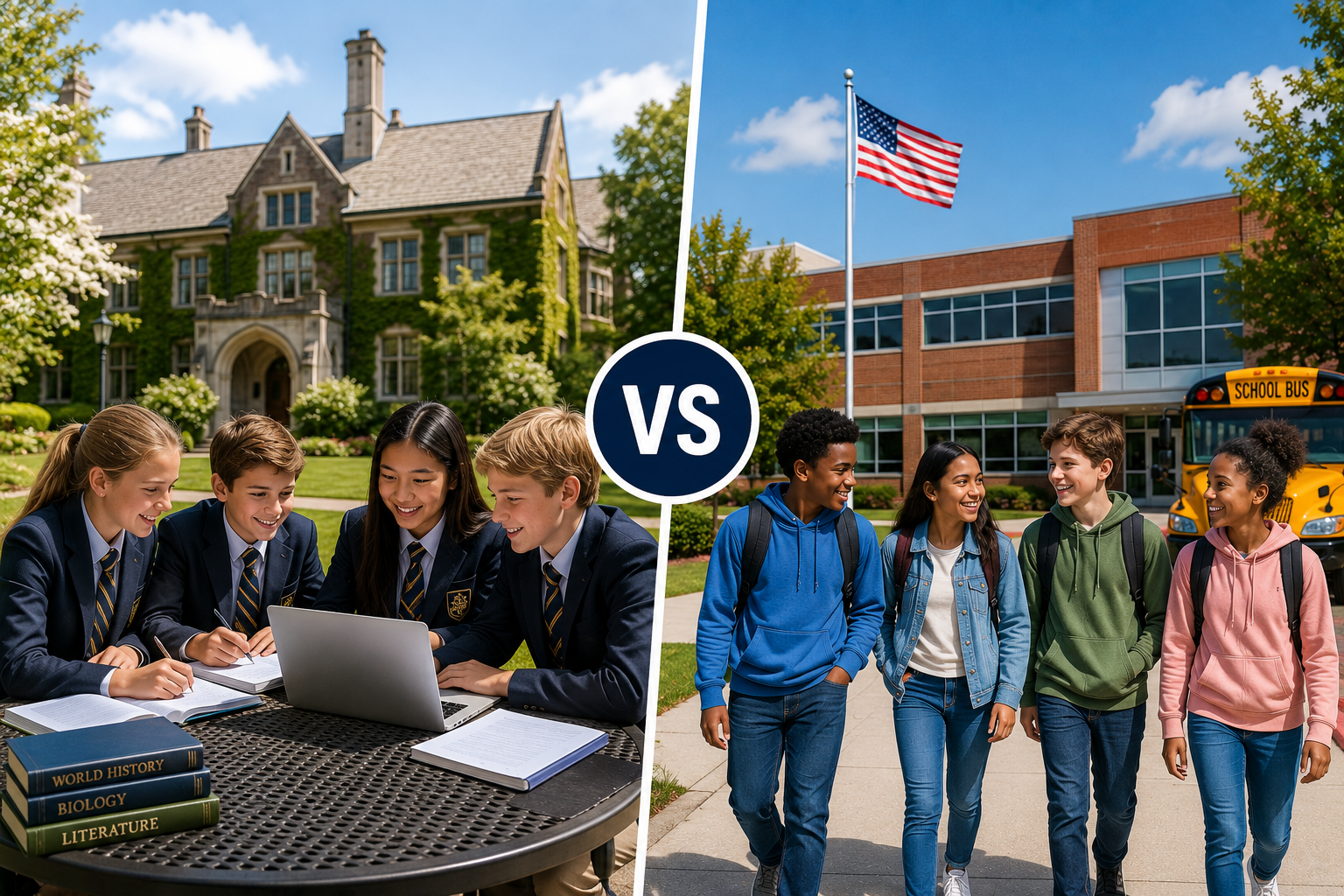
One of the biggest decisions parents face is whether to send their children to a public or private school.
I've spent years navigating that decision.
My children have attended four different private schools. My sister's children attend public school. Over the years we've compared academics, test scores, sports, resources, teachers, and overall experiences.
What I've learned may surprise you.
The truth is neither system is perfect.
And the academic difference isn't nearly as big as I once thought.
Like many parents, I believed private school would automatically provide a better education.
Smaller class sizes.
More individualized attention.
Stronger academics.
Better outcomes.
Some of those assumptions turned out to be true. Others didn't.
What I didn't realize before entering the private school world was how many tradeoffs exist.
One of the biggest surprises for me was learning that many private school teachers are paid significantly less than public school teachers.
In many cases, they also receive fewer benefits.
That doesn't mean they're worse teachers. Some of the most dedicated educators I've ever met have worked in private schools.
But it challenged my assumption that paying tuition automatically meant better-funded classrooms or better-supported teachers.
Private schools are businesses. Their funding largely comes from tuition and donations.
Public schools, on the other hand, receive state and local funding.
That means some private schools actually have fewer resources than certain public schools.
This was something I never considered before becoming a private school parent.
Where I do believe private schools often have an advantage is classroom size.
Many public school classrooms have 25 to 35 students.
Think about that for a moment.
How much individualized attention can one teacher realistically provide when managing 30 children?
Smaller class sizes often allow teachers to:
This is one of the primary reasons our family continues to choose private school today.
Another major difference is curriculum.
Public schools generally follow curriculum standards established by the state.
Private schools have much more flexibility.
Many carefully select curriculum programs and teaching approaches that align with their educational philosophy.
For example, my children attended Fairmont Schools, which is known for strong academics.
If your child is naturally academic and thrives in a rigorous environment, schools like Fairmont can be an incredible fit.
But academics aren't everything.
A school can be exceptional academically and still not be the right fit for every child.
This is where personal priorities become incredibly important.
This is where my perspective changed the most.
My sister's children attend public school.
Every year we compare academic performance, including standardized testing results.
Honestly?
The gap isn't nearly as large as many people would expect.
In fact, in many cases, the academic differences are relatively small.
That doesn't mean there are no differences.
But it does mean that paying tuition doesn't automatically create dramatically higher academic outcomes.
The reality is that many public school students are performing at very high levels academically.
One thing I've learned is that both systems have strengths and weaknesses.
Some public schools offer resources that private schools cannot match because of funding, district support, facilities, or athletic programs.
At the same time, some private schools provide opportunities, attention, and specialized programs that certain public schools cannot offer.
There isn't a clear winner.
It depends entirely on the individual school.
This was another surprise.
Many parents assume private schools automatically offer better athletics.
That isn't always true.
In some cases, public schools have stronger sports programs, larger athletic departments, better facilities, and more competitive opportunities simply because they serve larger populations.
When I compare my children's experiences with my sister's children, I don't see a dramatic advantage one way or the other.
Again, it often comes down to the specific school rather than whether it's public or private.
After experiencing four different private schools, I've come to one conclusion:
None of them are perfect.
Every school has strengths.
Every school has weaknesses.
Every school has tradeoffs.
Today, I still choose private school for my family.
But I'm much less convinced that private school is automatically superior than I was years ago.
In fact, I may change my mind in the future.
When I look at my sister's children, I see strong academics, great extracurricular activities, competitive sports programs, and happy kids.
The difference isn't nearly as dramatic as many people think.
Instead of asking:
"Which is better, public or private school?"
I think parents should ask:
"What environment is best for my child?"
Because the answer is different for every family.
Some children thrive in highly academic private schools.
Some thrive in larger public school environments.
Some need smaller classes.
Some need stronger athletics.
Some families prioritize values, culture, or educational philosophy.
Others prioritize affordability or convenience.
None of those priorities are wrong.
One final factor that often influences school choice is values.
Some families choose private schools because the school's culture, mission, or educational philosophy aligns more closely with their beliefs.
Others prefer public schools because they value the diversity and broad range of perspectives found there.
Neither approach is inherently right or wrong.
Every family must determine what aligns best with their goals and values.
If there's one lesson I've learned after years in both worlds, it's this:
There is no perfect school.
Not public.
Not private.
The best school is the one that helps your child grow academically, socially, emotionally, and personally.
For our family, private school remains the right choice today.
But after comparing experiences, test scores, sports programs, resources, and outcomes with family members in public schools, I now believe the gap between public and private education is much smaller than most parents think.
And that's a perspective I wish someone had shared with me years ago.
Not necessarily. In my experience, standardized test scores and academic outcomes were often more similar than different. The specific school and student matter more than whether the school is public or private.
For many families, it's smaller class sizes and more individualized attention from teachers.
Not at all. However, public school teachers often receive higher salaries and better benefits, which is something many parents don't realize.
Common reasons include smaller class sizes, educational philosophy, religious instruction, school culture, academic rigor, and alignment with family values.
Yes, for now. But after seeing strong outcomes from family members in public schools, I no longer believe private school is automatically the better choice for every child.
.png)